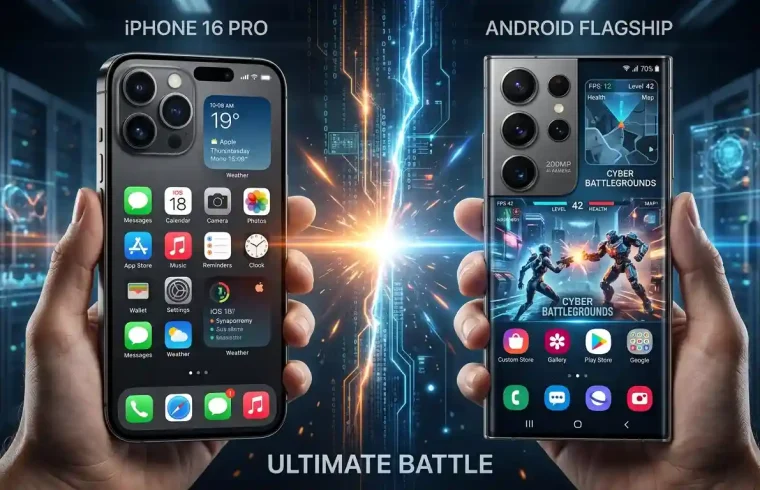
iPhone vs Android debate is one of the regular discussions going on in the smartphone world.
Some people have a soft spot for the iPhone with its luxurious and flagship design, seamless software experience and excellent ecosystem. Others like Android for its wide range of options, price points and devices. The two platforms are robust, widely used and useful, but they cater to different users.
Selecting between an iPhone and Android is not simply a brand name choice. From your budget to daily usage, camera needs, gaming habits, privacy preference, battery expectations and app usage, all of these factors can affect how long you might want to use your phone and how you use it every day. What may work as a perfect phone for one individual might not actually be a suitable option for someone else.
In this ultimate guide, you will find a simple and easy-to-understand iPhone vs Android comparison. In addition, you will know the key differences, pros and cons and buying factors to select a smartphone with confidence.
📱 Ready for the Ultimate iPhone Experience?
Explore the Apple iPhone 17 Pro Max (US Version, 256GB, eSIM). Compare today’s Amazon price, check availability, and read verified customer reviews before you buy.
🍎 Check Today’s Best PriceComparison Table: iPhone vs Android
| Feature | iPhone | Android |
|---|---|---|
| Operating System | iOS | Android |
| Brand Options | Apple only | Samsung, Google, OnePlus, Xiaomi, Motorola and more |
| Price Range | Mostly premium | Budget, mid-range and premium |
| Customization | Limited but clean | Highly customizable |
| Software Updates | Long and consistent | Depends on brand and model |
| App Experience | Smooth and optimized | Broader app compatibility with more diversity |
| Camera | Consistent and reliable | Numerous advanced options, depending on the model |
| Battery | Good optimization | Larger battery and quicker charging options |
| Gaming | Smooth and stable | More gaming-focused device choices |
| Privacy | Strong controlled privacy system | Strong privacy options, depending on the brand |
| Resale Value | Usually strong | Depends on brand and model |
| Best For | Simplicity, ecosystem and long-term use | Choice, flexibility and budget options |
What Is the Difference Between iPhone and Android?
The biggest difference between iPhone and Android is the operating system. iPhone uses iOS, which is developed by Apple. Android is the operating system used in Android phones, and Android phones are sold by smartphone brands such as Samsung, Google Pixel, OnePlus, Xiaomi, Motorola and others.
Apple owns the hardware and software of the iPhone. This helps iPhone provide a consistent and beautiful experience across its devices. On the contrary, Android is used by various brands, offering users more choices in terms of design, price, screen size, battery, camera and features.
The iPhone is arguably a better-feeling phone if you want a simple and polished smartphone experience. Android, on the other hand, may be more suitable if you want more freedom, more price flexibility and more device choices.
Design and Build Quality
When people compare iPhones vs Androids, one of the first things they notice is the design. Apart from this, iPhones generally look premium with solid build quality, clean finishing and a simple design language. Apple has very strict design rules, so iPhones are easy to identify.
There are many different types of Android phones. Some Android phones are sleek and premium, while others stick with basic features at affordable prices. Android phones are available with flexible displays, foldable screens, gaming-ready designs, massive batteries, slim bodies and many colour options.
🤖 Best Android Phones
🏆 Best Android Flagship
Premium performance, AI features, and an excellent camera for everyday use.
🔥 Check Today’s Price📸 Best Camera Phone
Capture stunning photos and videos with advanced camera technology.
📷 Compare Price🔋 Long Battery Life
Designed to keep up with work, travel, and entertainment all day.
⚡ View on Amazon| Design Factor | iPhone | Android |
|---|---|---|
| Premium Feel | Very strong | Strong in flagship models |
| Design Variety | Limited | Very wide |
| Foldable Options | Not common | Available from several brands |
| Budget Design Choices | Limited | Many options |
| Color Options | Selected colors | Wide variety |
| Build Quality | Consistent | Depends on model |
When it comes to a premium and consistent experience, iPhone is right there on top of the list. If you adore variety and unique phone designs, Android provides more opportunities.
🍎 Best iPhones
📱 iPhone 17 Pro Max
Powerful performance, premium design, and advanced camera features.
🍎 Check Today’s Price🎬 Best for Creators
Excellent video recording, editing, and content creation tools.
🎥 Explore on Amazon⭐ Premium Apple Experience
Compare today’s price and verified customer reviews before buying.
🛒 Check on AmazonUser Experience
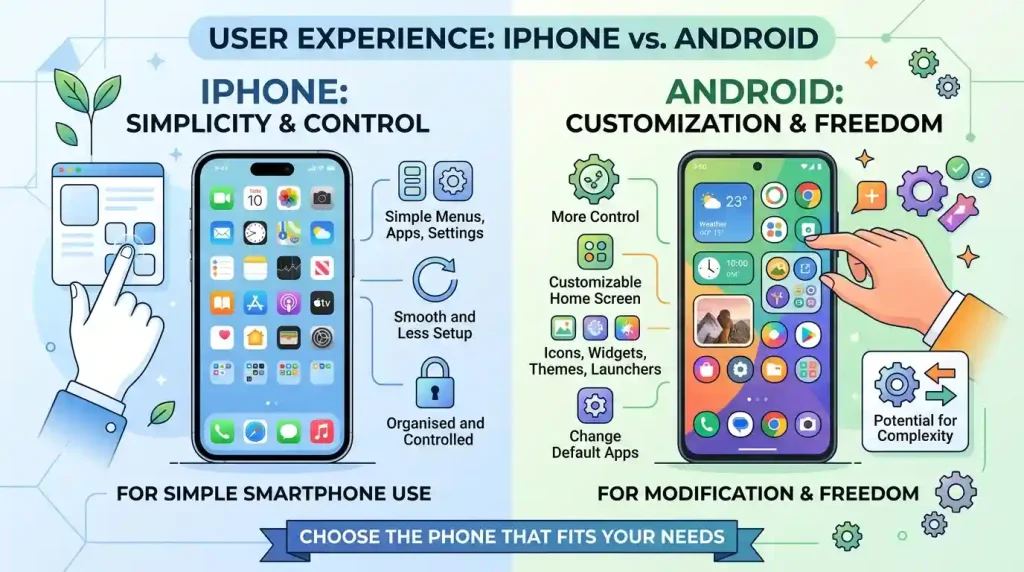
The iPhone is known for simplicity and a clean user experience. The menus, apps and settings are simple. People switch to iPhones often because they feel smooth and do not require too much setup. Everything feels organised and controlled.
Android gives users more control. The home screen, icons, widgets, default apps, launcher and other interface items can all be customised. This makes Android more flexible, but it may feel a tiny bit more complicated if you just want a simpler phone.
In conclusion, iPhone is for simple smartphone use, and Android is a better option for modification and freedom.
App Quality and App Store Experience
There are millions of apps on iPhone and Android for communication, social media, editing, productivity, gaming, shopping and entertainment. Most of the mainstream apps are available on both.
Many users believe apps are more optimised on iPhone because developers have to target fewer device models. Due to the multitude of screen sizes, brands and hardware types Android apps must support, the app experience may differ considerably depending on the phone.
Both platforms are good for routine use. If polished apps, silky smooth animations and consistently fast performance are priorities for you, iPhone might come out on top. If you value greater app flexibility and broader device compatibility, then Android is a definite contender.
Camera Performance
One of the biggest areas in the iPhone vs Android debate is camera quality. The iPhone is known for natural colours, smooth video and consistent photo quality. The iPhone is a device of choice for many content creators, primarily because it makes video quality dependable and the app user-friendly.
Android phones have a larger variety of camera options. Some Android flagship phones have strong zoom, high-resolution sensors, advanced night mode, pro camera modes and AI camera features. More expensive Android phones can hold their own better against high-end iPhones, even if budget models cannot.
| Camera Feature | iPhone | Android |
|---|---|---|
| Photo Consistency | Very strong | Depends on model |
| Video Quality | Excellent | Excellent in premium models |
| Zoom Capability | Good | Often stronger in flagship Android |
| Night Mode | Strong | Present in most high-end Android phones |
| Pro Controls | Limited but simple | More options on many models |
| Social Media Camera Use | Very smooth | Varies by app and model |
If all you want is simple, dependable camera performance, the iPhone is the safe bet. Android is much broader in terms of devices, with other options if you want more advanced camera features, zooms and manual controls.
Battery Life and Charging
Battery life depends less on the operating system and more on your phone model. Larger iPhones can have strong battery life. However, lots of Android phones supply huge batteries and speedy charging too.
Android generally provides faster charging options through various price categories. On the other hand, some Android phones charge super fast in comparison to an iPhone. Apple iPhones tend to focus more on battery optimisation and the long-term health of your battery.
| Battery Factor | iPhone | Android |
|---|---|---|
| Battery Optimization | Very good | Good, it depends on the brand. |
| Fast Charging | Available but usually slower | Often faster |
| Large Battery Options | Mostly larger models | Available in many price ranges |
| Charging Port Options | Modern iPhones use USB-C | Mostly USB-C |
| Wireless Charging | Available | Available in many models |
| Reverse Wireless Charging | Limited | Available in some models |
If fast charging is the most important thing for you, it’s better to go with Android. If you want a balance of battery performance with good software optimisation, an iPhone is the way to go.
Performance and Speed
One of the reasons iPhones perform so well is because Apple designs their own chips and software. This allows iPhones to keep working well for many years. Apps launch fast, animations are fluid and gaming performance is strong.
Android performance is different based on what phone you purchase. Premium Android phones are very fast and powerful, but cheaper models may slow down over time. High refresh rate displays, cooling systems and other gaming-focused features may also be available on gaming Android phones.
Usually, in the comparison of iPhone vs Android, we get consistent performance with iPhone models, while Android offers several performance options based on price range.
Gaming Experience
iPhone and Android are both good for mobile gaming. iPhones are known for great gaming performance and efficient app optimisation. This is because many games run quite well on iPhone due to the fact that hardware and software work very closely together.
Android gives more options in gaming phones. Some Android phones come with high refresh rate displays, large batteries, game triggers, performance modes and other gaming features. This becomes handy for users who play games for a long time.
| Gaming Factor | iPhone | Android |
|---|---|---|
| Game Optimization | Very strong | Strong on premium models |
| High Refresh Rate | Available on selected models | Available in many models |
| Gaming Phone Options | Limited | Many options |
| Cooling System | Standard | Advanced in gaming phones |
| Battery for Gaming | Good | Often larger in gaming phones |
| Gaming Accessories | Strong support | Wide support |
If you are looking for a simple and stable gaming experience, then an iPhone is great. Android might be more appropriate if you want gaming-oriented hardware and a wider price range.
Privacy and Security
Every smartphone user prioritises privacy and security. If you value a closed ecosystem and control over which apps have permission and privacy features, then the iPhone is generally the choice of many users. Apple emphasises privacy in its software and services.
Android has also made a lot of progress on the privacy and security front. App permissions are built into modern Android phones, along with security updates, malware protection and other privacy controls. But these can be a mixed bag by brand and model.
| Privacy Factor | iPhone | Android |
|---|---|---|
| App Permission Control | Strong | Strong |
| System Control | More controlled | More open |
| Security Updates | Consistent | Depends on brand |
| App Store Control | Strict | More flexible |
| Custom App Installation | Limited | More flexible |
| Best For | Control and simplicity for users | Users who seek freedom and flexibility |
If privacy is essential to you and you prefer a more regulated system, then an iPhone may feel better. Android is also a great pick if you want more freedom along with solid security options.
Software Updates
The iPhone vs Android question also includes software updates. Although not all iPhones get every software update forever, the company does tend to support older models for many years. This means that an iPhone is also a good choice for people who want to use their phone for a longer timeframe.
Android updates depend on the brand. Most Android brands have update support, while some may provide fewer updates. Android phones with better update support will generally be found in more expensive flagship and midrange models.
If long-term updates are a critical factor in your choice, iPhone is an obvious contender. In the case of Android, check the brand update policy before purchasing.
🤖 Looking for the Best Android?
🔥 Check Today’s Price🍎 Thinking About iPhone 17 Pro Max?
⚡ Check Today’s PricePrice and Value
Cost is one of the top driving forces for people picking Android. Android devices come with a variety of budgets. You can get a low-cost Android phone, mid-range device or high-end flagship.
Although iPhones tend to be pricier upfront, they frequently retain decent resale value. Customers buy an iPhone because it carries a longer shelf life and the phone can be resold later for a good price compared to many other phones.
| Budget Type | Better Choice | Reason |
|---|---|---|
| Low Budget | Android | More affordable options |
| Mid-Range Budget | Android | Better variety and features |
| Premium Budget | Both | Depends on preference |
| Long-Term Resale | iPhone | Usually stronger resale value |
| Best Value for Features | Android | More choices at different prices |
| Long-Term Software Support | iPhone | More consistent updates |
If you prefer to have the most budget-friendly smartphone options, Android will outperform them. If you want premium value and future resale strength, an iPhone is a strong choice.
Customization
The area in which Android excels is customisation. You can change launchers, icons, widgets, defaults and many other interface elements on Android. You can customise the actual look and feel of your phone however you like.
Apple has gradually added more customisation options over time with its iPhone, but it ultimately remains more limited than Android. Instead of full flexibility, Apple emphasises a clean and controlled experience.
When it comes to customisation, Android should be your consideration. For simple interface lovers, iPhone is enough.
Ecosystem
Apple has a strong ecosystem. If you already own a MacBook, iPad, Apple Watch or AirPods, all the devices can work together for a satisfying ecosystem experience. You can transfer files and accept calls and messages on your device easily.
Android also plays nicely with Google services, Windows PCs, smart TVs, smartwatches and a growing universe of accessories. It is worth mentioning that Android allows for greater flexibility when it comes to brands; however, depending on the devices used, the experience may differ.
| Ecosystem Factor | iPhone | Android |
|---|---|---|
| Laptop Connection | Best with MacBook | Good with Windows and Chromebooks |
| Smartwatch Support | Best with Apple Watch | Many smartwatch options |
| Earbuds Support | Best with AirPods | Many Bluetooth options |
| File Sharing | Smooth within Apple devices | Flexible across many devices |
| Smart Home | Apple Home and supported devices | Google Home and many brands |
| Best For | Apple product users | Multi-brand users |
If you already own Apple products, an iPhone makes more sense anyway. If you use different brands and Google services, Android might be more suitable.
Storage Options
Another factor to consider when selecting between iPhone and Android is storage. iPhones are available in fixed storage options, meaning that you have to choose the correct size when buying. You cannot add a memory card in modern iPhones.
However, many Android models still support expandable storage via microSD cards, although some newer Android phones have adopted built-in storage as well. This is especially handy for those who store numerous photos, videos, music files or documents.
If you prefer easier storage expansion, then Android might be your way to go. The iPhone can work well if you want something clean and prefer cloud storage.
Display Quality
Handheld devices like phones have fantastic displays, iPhones and Androids alike. On supported devices, the displays are bright and colour-accurate for iPhones, while performance is uniformly smooth. Android phones have more options available, including high refresh rate displays, large screen sizes, curved displays and foldable screens.
In terms of videos, games and browsing, both platforms can be pretty good. The operating system is less important than the specific model when it comes to display performance.
Durability and Repair
Durability comes down to the phone model, materials and use. iPhone build quality tends to be solid, but repairs typically are not cheap when needed. Android repair pricing is based on manufacturer and device. Some Android phones are easier and cheaper to repair, while premium Android phones may have a similar cost of repairs.
A good case is also critical for both iPhone and Android, along with a screen protector. Regardless of which phone you opt for, having the right protection gives your device a longer shelf life.
Which Is Best for Students?
Which one students choose really depends on budget and everyday use. If you want the most value for your money, then Android can be a strong choice. A good battery, huge screen and reasonable camera can be found in Android phones at a lower price.
If you want a long-lasting phone, an iPhone can be a good option because it has great performance and resale value. Although it may have a higher initial cost, it can last for years.
| Student Need | Better Choice |
|---|---|
| Low price | Android |
| Long-term use | iPhone |
| Good camera for content | Both |
| Better resale value | iPhone |
| More storage options | Android |
| Simple use | iPhone |
Which One Is Best for Business Users?
Business users often choose iPhone because they need something simple, secure and reliable. The model performs well for emails, video calls, documents and productivity apps. With the clean interface, users can also stay focused.
Android is also a great choice for business because of giant screens, multitasking features and many more options. Some Android phones are excellent for productivity and work.
The iPhone is a solid option for a simple professional use case. Android could be a great deal for flexible work functions.
Which One Is the Best for Content Creators?
Camera quality, video quality, video editing app support, microphone support and social media performance are common things that content creators care about. iPhone has long been the go-to for content creators due to its consistent video quality and seamless social media app performance.
Android is also very capable for content production, especially top-end phones with considerable zoom and large sensors. Manual camera controls are often available too. Android devices allow creators to get more options when it comes to devices and creative camera features.
If you just want simple and dependable video, an iPhone is a strong answer. If you seek more camera controls and hardware variety, Android will probably suit better.
Older Users: Which One Is Better?
Generally, older users love a phone that is basic, functional and user-friendly. Because of its clean and consistent interface, iPhone can be a good option. It is good for video calling, messages and other basic apps as well.
Android can be great for older users too, primarily because there are so many budget models with big screens and easy mode. Several Android phones also include the option to resize icons, enlarge text and simplify navigation.
The best option depends on which is more comfortable. If the user wants simplicity, iPhone is not a bad choice. Android makes sense if the user is after a larger and cheaper display.
Pros and Cons of iPhone
| Pros of iPhone | Cons of iPhone |
|---|---|
| Smooth and simple user experience | Usually expensive |
| Strong software updates | Less customization |
| Great video quality | Limited device variety |
| Strong resale value | Repair can be costly |
| Excellent Apple ecosystem | Fewer budget options |
| Strong privacy features | Less flexible than Android |
Pros and Cons of Android
| Pros of Android | Cons of Android |
|---|---|
| Many price options | Experience varies by brand |
| More customization | Updates depend on the model. |
| More device variety | Some budget phones may slow down |
| Fast charging options | App experience can vary |
| Foldable and gaming phone options | Resale value varies |
| More flexible system | Can feel complex for beginners |
Buying Checklist Before Choosing
Simple questions can help you decide whether to choose iPhone vs Android or not.
| Question | Choose iPhone If | Choose Android If |
|---|---|---|
| What is your budget? | You can spend more for long-term value | You want more affordable choices |
| Do you want customisation? | You prefer simple settings | You want full control |
| Do you use Apple products? | You are using MacBook, iPad or AirPods | You use Google, Windows or other brands |
| Is a camera important? | You want simple and consistent video | You want advanced camera features |
| Is gaming important? | You want stable performance | You want gaming-focused hardware |
| Is fast charging important? | You are okay with slower charging | You want faster charging |
| Do you keep phones for years? | You want long updates | You are checking brand update policy |
| Do you care about resale value? | You want stronger resale | You prefer better upfront value |
Final Verdict: iPhone vs Android
Therefore, there is no clear winner when it comes to iPhone vs Android. Both are great, but they serve different users.
Choose an iPhone if you like a clean interface, smooth performance, great privacy control, a long support period for devices, strong resale value and an ecosystem that feels high-end. The iPhone may also suit you if you have invested in more Apple products and would like everything to integrate nicely.
Pick Android for more choices, more customisability, cheaper prices on low-end and mid-range devices, superfast charging speeds, unique designs and more capable features. If you want a certain kind of phone like a gaming phone, foldable phone or something low-cost, Android also arguably does it better.
The phone that suits your lifestyle, budget and day-to-day needs is the best one. When you get down to it, ask yourself what matters most: camera, battery, gaming, privacy, updates, price, storage, ecosystem or customisation. Once you know your priorities, it becomes easier for you to choose between iPhone and Android.
FAQs About iPhone vs Android
Is iPhone better than Android?
Both are good. iPhone is better for simplicity, updates and ecosystem. Android is better for customisation, pricing options and device choices.
Is iPhone safer than Android?
The iPhone is a more controlled platform with strong privacy protections. Android has solid security tools built in, but those vary by brand and model.
Which is best for gaming?
Gaming is good on both iPhone and Android. iPhone offers stable performance, while Android has more gaming smartphone options.
Which has the best battery, iPhone or Android?
Battery time varies from model to model. iPhones can have great battery life, and many Android phones feature large batteries with quick charging.
Which will hold up better?
iPhone usually offers longer support periods and better resale value. Certain high-end Android phones also offer long-term support.
Which is better for students?
Android is more appealing for students needing a lower price point and more variety. iPhone is best for students who want smooth performance and better resale value.
Which is preferable for business usage?
iPhone is best for simple, secure and reliable business use. Android is great for those who want more multitasking, larger screens and a wider array of devices.
What is more suitable for content creators?
iPhone is great for straightforward, consistent video shots. Android is great for creators who want extra camera features, zoom levels and manual controls.
Which is better for customisation?
Android gives you more control over your home screen, icons, widgets, default apps and interface style.
Should I buy an iPhone or an Android?
Buy an iPhone if you care about simplicity, longevity of updates and a strong ecosystem. Get Android if you want choice, customisability and more tiers of pricing.