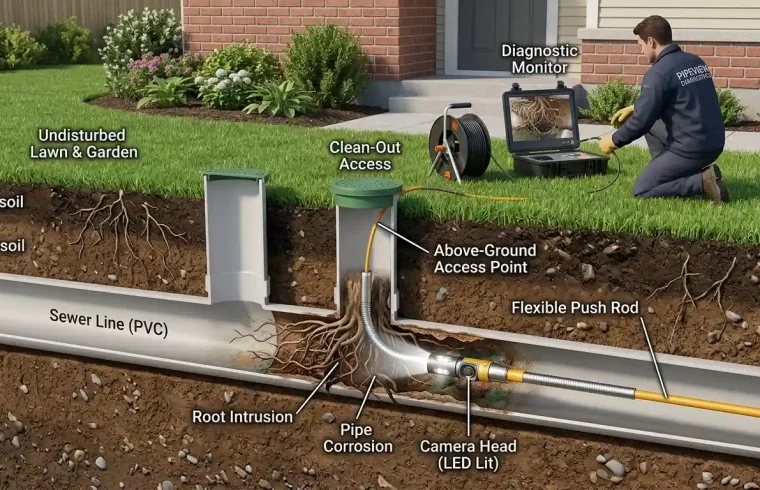
If you are involved in plumbing, a sewer camera is probably the single best tool that you can use to inspect drain lines, sewer pipes and other difficult-to-reach areas of your plumbing system.
Instead of guessing that there is a blockage or an area with cracks, root problems, or pipe issues, you can actually see what is happening inside the pipe due to a sewer camera.
This is a kind of camera that works mostly with plumbers, home inspectors, contractors and homeowners to take a look inside any drain or sewer line. This will help determine clogs, damaged pipes, slow drain issues, leaks and tree root incursion along with other concealed troubles.
That said, however, all sewer cameras are not created equal. Some are for professional inspection, and some are meant for more basic household use. Some have extended cables, 5500W LED lights, storage capabilities, auto-positioning camera heads, waterproof cameras, and built-in locators.
This sewer camera guide describes what pipe inspection cameras do, features that matter to you, which type of sewer camera to buy, and how you can choose the very best.
Quick Picks: Best Sewer Camera
| Category | Recommended Pick | Best For |
|---|---|---|
| Best Overall | RIDGID SeeSnake Standard | Professional sewer inspection |
| Best Compact Pick | RIDGID SeeSnake microREEL | Smaller pipe inspections |
| Best Budget Pick | Sanyipace Sewer Camera | Home and light inspection use |
| Best Value Pick | VEVOR Sewer Camera | Affordable pipe checking |
| Best Long Cable Pick | Sewer Scope with 200 ft Cable | Longer drain and sewer runs |
| Best for Homeowners | Portable Sewer Inspection Camera | Basic home drain checking |
| Best for Plumbers | Professional Pipe Inspection Camera | Daily plumbing work |
What Is a Sewer Camera?
A sewer camera is a waterproof camera that is attached to a rigid, flexible push cable. This drain camera is something that can be placed into a sink, as well as far inside of a drain, sewer line or pipe to see just what exactly is going on in these places.
Typical sewer camera system equipment includes the following:
- Camera head
- Push cable
- Monitor or screen
- LED lights
- Reel or cable holder
- Recording option
- Power source or battery
- Waterproof housing
- Optional sonde or locator
It is a camera that sends live video on the monitor for you to check the pipe. In addition, some systems give you the capability to record video and/or images that can then be attached to reports in anticipation of a future review.
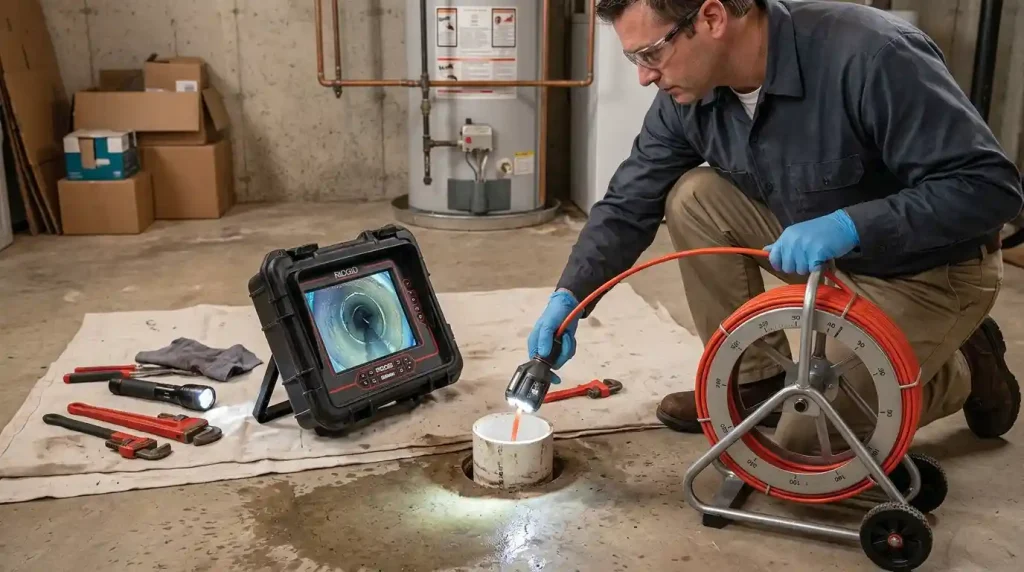
When should you take help of a sewer camera?
The first is the advantage of not having to dig up your yard. This is helpful because many pipe issues are not visible.
A sewer camera can detect the following:
- Drain clogs
- Broken pipes
- Cracked sewer lines
- Root intrusion
- Pipe corrosion
- Blockages
- Grease buildup
- Foreign objects
- Pipe misalignment
- Standing water
- Bellied pipes
- Sewer line damage
This can help avoid a lot of digging or pipe opening when the real problem is unknown and ideally should be first visualised through with a sewer camera.
🚨 See Why Professionals Choose This Camera
👉 View on AmazonWhen to Use a Sewer Camera?
Various users are trained on a sewer camera.
Homeowners
If you have slow drains yourself, if your outdoor drain is clogged, or if your basement drainpipe has some problems, then maybe use a sewer camera before calling a plumber.
Plumbers
A sewer camera inspection is very helpful for a plumber to assess the condition of pipes, standpipes, or sewer lines and visually demonstrate this to customers.
Home Inspectors
Sewer camera — This tool is used for home inspections to assess the state of your sewer line.
Contractors
Pipe inspection cameras may be used by contractors to scan pipes before or after they have performed repairs on them.
Property Buyers
Purchasers can pay for a sewer apparatus inspection to extend the sewer lines under the property they are acquiring.
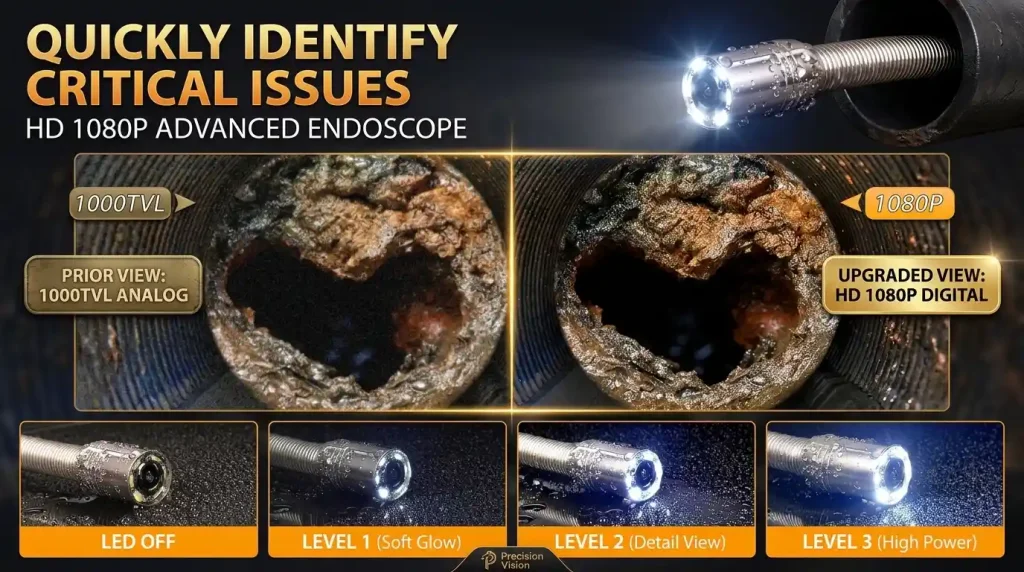
Best Overall: RIDGID SeeSnake Standard
The SeeSnake Standard from RIDGID is a capable competitor in the sewer inspection space for professional sewer inspection. It targets plumbers and serious inspection users for larger pipe inspection and longer runs.
This is not just a standard homeowner sewer camera. It is meant for more professional use where durability, cable length, and the inspected quality do matter.
Why It Stands Out
What makes the RIDGID SeeSnake Standard relatable is that it has been designed specifically for professional pipe inspection jobs! This is perfect for long sewer lines and larger pipe sizes.
Pros
- Professional-grade system
- Suitable for long inspections
- Strong build quality
- Good for plumbers and contractors
- Useful for sewer line inspection
- Supports serious inspection work
Cons
- Expensive for casual users
- Heavier than small systems
- More than most homeowners need
- A compatible monitor or peripheral might be required
Best For
If you need a sewer camera to do plumbing jobs or professional-feel inspections, go with the RIDGID SeeSnake Standard.
Ideal for Smaller Spaces: RIDGID SeeSnake microREEL
MicroReel by RIDGID — A possible option for smaller-pipe inspections Which is handy when you want a more portable system that requires shorter lines to be read.
A small sewer camera is portable, easy to store, and designed for tight crevices. Not ideal for very long sewer runs, but it can be an effective solution for the low end.
Why It Stands Out
What sets microREEL apart from larger sewer camera systems is that size matters. Optional, for those who need to take it with them and for ease of handling.
Pros
- Compact design
- Easier to carry
- Good for smaller pipe inspection
- Useful for home inspectors
- More portable than large reels
- Practical for medium-duty work
Cons
- Not ideal for every pipe size
- Shorter cable than large systems
- May need compatible equipment
- More expensive than the budget options, but still pretty affordable too
Best For
The next type of sewer camera you may want to consider is a much smaller size, which will be the RIDGID SeeSnake microREEL.
Best Budget Pick > Sanyipace Sewer Camera
A Sanyipace sewer camera is a cost-effective choice for home users and lighter inspection tasks. This is something that usually interests the buyers who want to avoid spending unnecessary money on professional equipment and want a screen, cable, LED lights and recording all in one device
These have very basic applications in pipe inspection but probably will not provide you with the robustness, image quality and longer-term reliability of commercial systems.
Why It Stands Out
A cheap sewer inspection camera is a relatively inexpensive way for homeowners and infrequent users to visually check drains and pipes without the cost of higher-quality cameras.
Pros
- Affordable compared to professional systems
- Useful for home drain checking
- Often includes monitor and cable
- LEDs Help in Dark Pipes
- Good for basic inspection
- Practical for occasional use
Cons
- Model professionals appear to usually last longer
- Image quality may vary
- Cable strength may be limited
- Doesn’t belong in a production environment
Best For
Choose Sanyipace Sewer Camera for a cheap substitute for home use, pipe inspection, and drain checking.
Budget Pick: VEVOR Sewer Camera
The VEVOR sewer camera has a decent value-to-price ratio and is one of the more affordable route camera inspection options for consumers who want to try this choice out before committing to a larger purchase. Typically, most DIY users as well as light-duty professionals and homeowners will use it.
A video feed of information from a good-value sewer camera fed to an appropriately lengthed cord for your needs and even easier monitoring can be in the near future.
Why It Stands Out
A quality sewer camera provides you with the inspection functionality of a professional without having to pay the pro prices.
Pros
- Good value for money
- Useful for basic pipe checking
- Suitable for homeowners
- Often includes screen and reel
- Practical for occasional inspection
- More affordable than high-end systems
Cons
- Maybe not the ideal choice for everyday use
- Cable quality may vary
- Image quality is model-dependent.
- Support and parts will differ depending on the vendor
Best For
Another option for less costly pipe inspection equipment that can check the primary sewer and drainage is to purchase a VEVOR sewer camera.
⭐ Top Pick for Pipe Inspection
View Price →Best Long Cable Sewer Camer
The long cable sewer camera is most suitable when you need to view deeper down the sewer line. There are a few important things to be aware of, the most important being cable length, which will dictate how far you can get into a pipe to move the camera.
Common cable lengths include:
- 50 ft
- 100 ft
- 150 ft
- 200 ft
- 325 ft
Longer cables tend to be optimal for larger properties, main sewer lines, and professional inspections. However, they can also increase the size and cost of the system.
Pros
- Better for long sewer lines
- Useful for professional work
- More inspection reach
- Good for larger properties
- Might reduce the no. of touchpoints
Cons
- Heavier system
- More expensive
- Harder to manage for beginners
- Not actually needed for some small drains of the house
Best For
So, if you have longer distances that need scanning, cable sewers are ideal for main sewer lines and larger properties (depending on the depth of your drain systems).
Best Sewer Camera for Homeowners
The top-notch sewer camera is not something that many homeowners need. For inspecting the sluggish drains, open channels, basement lines and basic plumbing issues, you always need a low-end or mid-range model
Homeowners should look for:
- Easy setup
- Clear screen
- LED lights
- Waterproof camera head
- Enough cable length
- Recording option
- Simple controls
- Good return policy
The ideal sewer camera for homeowners is intuitive, affordable and straightforward to use.
Best Sewer Camera for Plumbers
Plumbers need a more robust and durable device because they can also use the camera quite heavily. A robust design, easy mobility, the ability to see inside pipe structure well even in total dark pipes, and availability of compatibility with other reporting or locating kits are the essential parts of such equipment.
Plumbers should look for the following:
- Strong push cable
- Long cable length
- Self-leveling camera
- Bright LED lighting
- Sonde or locator support
- Recording and photo capture
- Rugged reel design
- Good waterproof rating
- Reliable service support
Since a sewer camera is an investment and the right one will last longer than a cheaper model, support matters more than getting the cheapest one.
It is good to have specialized features when looking for a sewer camera
Here are a few crucial pointers before you make the decision of buying a sewer camera.
Camera Quality
The clearer the camera, the easier to see into your pipe. If you trained with a very high-level digital camera, it will become much easier to identify cracked lines.
Look for:
- Clear video
- Good low-light performance
- Wide viewing angle
- Durable camera head
- Self-leveling option
- Scratch-resistant housing
Cable Length
Cable length is very important. The small cables are great for sinks or small drains, but you need a longer length for sewer lines.
Choose the length of cable depending on how it will be used:
- 50 ft for small home drains
- 100 ft for general home use
- Or 150 ft to 200 ft for longer pipe runs
- Professional sewer inspection of 300 ft and greater
Don’t you dare go for the longest cable simply because it feels better. Longer cables may then be harder to manage.
Cable Strength
So the cable must not be too stiff to navigate through bends, but it must also have enough stiffness to push itself through longer sections of piping.
Good cable should be:
- Flexible
- Durable
- Easy to push
- Resistant to bending damage
- Suitable for the pipe size
- Strong enough for repeated use
Waterproof Rating
Since you will be using it to inspect wet drains and sewer lines, your sewer camera should also be waterproof.
Look for:
- Waterproof camera head
- Sealed cable connection
- Good build quality
- Water-resistant monitor protection
- Durable housing
This means that you will be needing a waterproofed camera when having drain and sewer pipe inspection services.
LED Lights
Pipes are dark holes, so the lighting needs to come from LEDs. You will be able to see these blockages, cracks and pipe walls with your adjustable bright LEDs!
Good lighting helps with:
- Dark pipes
- Muddy lines
- Standing water
- Clogs
- Roots
- Pipe cracks
Screen Size
Having a large screen makes inspection easier Some sewer cameras are all-in-one with built-in monitors, while others connect to outside screens or smart devices.
Common screen sizes:
- 4.3 inches
- 5 inches
- 7 inches
- 9 inches
- Larger professional monitors
At home, perhaps you could get away with a single screen sized for sitting. You will generally want something with a larger screen for work.
Recording and Photos
If you want to maintain a record of your inspections, recording is helpful. It helps in case of reports, customer proof, and repair planning & future comparison.
Recording features may include:
- Video recording
- Photo capture
- SD card storage
- USB export
- Timestamp
- Audio notes
- Report support
Sonde and Locator Support
A sonde is imparted within or near the camera’s head. Using a locator for the camera, it aids in pinpointing where exactly the camera is underground.
This comes in handy if you need to look up:
- Exact blockage location
- Broken pipe location
- Pipe path
- Sewer line depth
- Repair point
Sonde assistance can be crucial for service plumbers.
Self-Leveling Camera
This is a camera that self-levels and keeps the image in place as it travels through the pipe, not moving out of alignment. Without this feature, the video could spin and become unreadable.
Self-levelling is useful for:
- Professional inspections
- Reporting
- Customer explanation
- Easier viewing
- Long pipe runs
⭐ Top Pick for Pipe Inspection
View Price →Battery Life
Battery life: If the sewer camera comes with a stand-alone monitor that works on battery, then you should take into consideration this feature. Enhanced battery life facilitates their job validity for fieldwork and extended inspection zones.
Check:
- Battery capacity
- Charging time
- Runtime
- Replaceable battery option
- Power adapter support
Sewer Camera VS Regular Inspection Camera
A sewer camera is different from a normal inspection camera.
A normal inspection camera would possibly suffice for inspecting small places, wall spaces, vents or lightweight-duty checking. Usually built for wet pipe inspection, a sewer camera will often incorporate a longer cable, waterproof head and strong push cable.
Choose a sewer camera if
- You inspect drains
- You inspect sewer lines
- You need waterproof equipment
- You need a longer cable
- Pipes require LED lighting
- You need a pipe issue to record
Select a standard inspection cam if:
- You only need light inspection
- You inspect walls or vents
- Unfortunately, you are limited to data before October 2023.
- No need for stretched cables in reach
- You do not check sewer lines
In general, whenever you need to do any drain and pipe work, a camera is the only way of doing it.
Sewer Camera vs Plumbing Snake
A plumbing snake clears clogs. Sewer camera footage showing the inside of the pipe.
These are two different tools, but they could work together.
A sewer camera helps you see the following:
- Where the clog is
- What caused the blockage
- Whether the pipe is damaged
- Roots within the line
- Whether repair is needed
A plumbing snake helps you:
- Break up clogs
- Move blockages
- Clear drains
- Restore water flow
If the only thing you need to do is unclog, then the plumbing snake may, in fact, work fine. If you want to gather more context on the issue, invest in a sewer camera.
How to Use a Sewer Camera
Using a sewer camera is a fairly straightforward, smart, and wise exam to make use of the camera, making sure that you do not damage the cable or electronic eyes.
Basic steps:
- Enable monitor and camera.
- Test the camera light.
- Insert the camera slowly and gently in the drain or pipe.
- Push the cable carefully.
- Keep your eyes on the screen as the camera flies in.
- Stop if you notice any obstructions or damage.
- Shoot video or snap photos where warranted.
- Pull the camera back slowly.
- After use, clean the camera and cable.
Never Attempt to Force the Camera Through Tight Corners or Obstructions Those issues are a sensitive area as well, so for that one, you might want to call in a professional plumber.
Common Problems That Can Be Found With A Sewer Camera
A sewer camera can identify many pipe problems.
Common findings include:
- Tree roots inside pipes
- Grease buildup
- Broken pipe sections
- Cracked pipes
- Collapsed lines
- Offset pipe joints
- Mud or debris
- Standing water
- Foreign objects
- Corrosion
- Poor pipe slope
- Bellied pipe sections
So the clearer your problem, the easier it becomes to decide what you do next.
Buying Tips Before You Order
How to Choose Between: Sewer Cameras
- Price: Pricing can vary both ways depending on the sale.
- Cable length: Depends on what you will be inspecting.
- Camera head size – Check if it can fit your pipe size.
- Waterproof rating: Needed for inspecting damp pipes.
- LEDs that you can use: LEDs that are critical percentages for dark sewer lines.
- Screen: A clear screen for inspection is always better.
- Record: For history and documentation.
- Battery life—Which is essential for long inspections.
- Sonde support: This is helpful for locating issues underground.
- Return: Applicable for jobs that come with a unique fit and performance.
- Warranty: Purchase from reputable sellers and official stores.
Conclusion: Which Sewage Camera Should You Purchase?
Every camera is different for everyone, but overall most specs are similar across the board. For instance, if you are a pro plumber using the camera out in the field day after day, it might make sense to buy a heavy-duty system like a RIDGID SeeSnake model, where cable toughness and locator compatibility really count.
You likely don’t need a professional-grade system if you are a homeowner. If you want to have an occasional check-up of drains and continue some inspecting, you can get away with a budget sewer camera from brands like Sanyipace or VEVOR.
If you are diagnosing long sewer lines, choose a model that comes with a cable long enough to reach these depths. If you have to locate underground pipe problems, use a sonde-enabled sewer camera. In case you plan to enjoy it by only looking at your screen, then choose a model that supports viewing and recording as well without much trouble.
A good sewer camera will allow you to save time and guesswork while also giving you an understanding of what is going on inside your pipes before doing anything else.
FAQs About Sewer Camera
What is a sewer camera?
A sewer camera is a waterproof inspection camera that is attached to a cable. It is the tool that is used for hardcore inspection of drains, sewer lines and pipe
How to use a sewer camera?
A sewer camera is an effective tool used to find cracks, clogs, roots and broken pipes as well as standing water or damage inside a drain or sewer line.
Can I operate a sewer camera for myself?
However, the simplest drain checking can be accomplished by standard sewer cameras that homeowners may use. That being said, though, most sewer problems should be left to professional help (e.g., go with the plumbers).
What is the length of the sewer camera cable?
Generally, the measure is a lot of like 100 ft; nevertheless, for some minor household drains you could not even require an entire 50 ft. While commercial sewer inspection may range anywhere from 150 feet to over 300 feet or beyond.
Is a sewer camera waterproof?
Naturally, it needs to be waterproof because the sewer camera will go inside wet drains and sewer lines.
An important question we get asked is Can a sewer camera find tree roots?
A sewer camera can tell if tree roots have grown into sewer pipes as far as the camera reaches.
IS IT POSSIBLE TO FIND THE BLOCKAGE WITH A SEWER CAMERA?
Yes, the sewer camera can determine exactly where there is a blockage and what it consists of.
As you may know from sewer cameras, when the camera is in the pipe checking it out, you can select to send this sonde signal above ground.
A sonde is a type of transmitter that enables you to locate the camera head underground with a locator tool. It helps in identifying the real problem area.
What is the Difference Between a Sewer Camera and a Plumbing Snake?
A plumbing snake is equipment used to clear clogs underground, while a sewer camera health condition views the area in trouble of a pipe. They serve different roles and can be used in conjunction with each other.
What to look for before you buy a sewer camera?
Look for cable length, camera quality, waterproof rating, LED light, screen size with recording option, battery life & warranty.